Short version: poker in Duel Arena is a Sit & Go: no-limit Texas Hold’em for 2 to 9 players who all start with 100 big blinds and play until one person holds every chip. Blinds rise on a timer you choose in the lobby, each decision runs against a clock with a shared 30-second time bank, and the prize pool is split by field size, from winner-take-all with up to 3 players to 50/30/20 with 7 to 9. Cards are shuffled with a cryptographically secure generator and dealt on the server. There is no demo mode. We read the full rules panel but did not play for stakes.
How a Duel Arena Poker Match Works
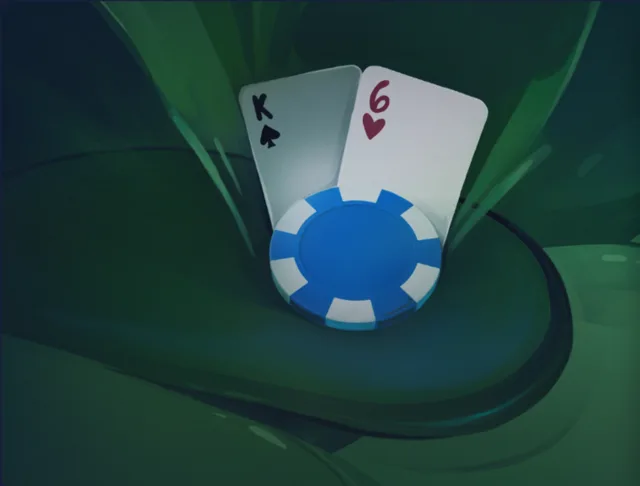
Each hand is standard Texas Hold’em. Every player gets two private hole cards, five community cards arrive across the flop, turn and river, and the best five-card hand wins. The dealer button moves clockwise each hand: the two seats after it post the small and big blinds, and the player after the big blind opens the preflop betting. Heads-up, the button posts the small blind and acts first before the flop.
It is a tournament format, not a cash game. Stacks carry between hands and you are out when your chips run out. A hand is won when everyone else folds or by holding the best hand at showdown, and an exact tie at showdown chops the pot before play moves on. A lobby option called rabbit hunting, off by default, lets players who had chips in a hand that ended early privately see the cards the board would still have dealt.
Blinds and Antes
Everyone starts with an equal stack of 100 big blinds. The blind level then climbs on the schedule picked in the lobby:
- Standard: the level goes up every 5 minutes.
- Turbo: every 3 minutes.
- Hyper: every 2 minutes.
- Custom: your own blinds, antes and level lengths, timed or counted in hands. The full structure appears in the lobby’s blinds panel.
Every dealt player also posts a small ante each hand. A short stack posts whatever it has and is all-in for less. Rising blinds and antes keep a match from stalling, so a faster schedule rewards aggression and a slower one rewards patience.
Betting and the Action Timer
On your turn you can fold, check (when there is no bet), call, bet or raise. A raise must be at least the size of the previous bet or raise unless you are moving all-in. You can go all-in at any time. An uncalled all-in for more than the others can match is returned to you, and a player who is all-in for less competes only for the chips they matched, with further betting building side pots that are decided separately at showdown.
Every decision runs on a clock shown beside the active seat, and the action length is chosen in the lobby. Run the clock out and your 30-second time bank starts draining. It is one bank for the whole match and is only spent while you overrun. With the bank empty you automatically check when you can and fold when you cannot. A disconnected player is folded and blinded down until they return or bust, so a short drop costs you only the hands you fold.
Duel Arena Poker Payouts by Table Size
| Players at the start | Places paid | Split |
|---|---|---|
| 2 to 3 | 1st only | 100% (winner-take-all) |
| 4 | 1st and 2nd | 70 / 30 |
| 5 to 6 | 1st and 2nd | 60 / 40 |
| 7 to 9 | 1st to 3rd | 50 / 30 / 20 |
Players who bust on the same hand are ranked by the stack they brought into it. Exact ties share the finish and split the combined payout of the tied places. The rules panel does not say whether a fee comes off the prize pool first, so check the lobby before you buy in.
Shuffling and Fairness
Poker is the one Arena game where Duel documents its randomness in detail. The deck is shuffled by a cryptographically secure random number generator seeded from operating-system entropy. Every hand uses a fresh 52-card deck and an unbiased Fisher-Yates shuffle, so all 52! possible orders are equally likely. The complete deck order, including the turn and river, is locked in at the moment of the shuffle, before any betting, and all dealing happens on the server: your device receives only your own hole cards and the community cards as they are revealed.
That is a clear account of how the cards are generated and protected, but note what it leaves out. It does not mention client seeds or a way for players to verify a hand afterwards, which is how Duel’s Originals work (see provably fair). You are trusting the server’s shuffle, not recomputing it.
Before You Sit Down
- Watch a table first. The Arena home page lists Ongoing Matches with a Spectate button, which is the nearest thing poker has to a demo.
- Pick a blind schedule that fits you. Standard gives you time to play poker; Turbo and Hyper turn it into a shove-or-fold race.
- Set your own limit. There is no practice mode and we could not find a fee schedule, so decide the most you will put in before you open the lobby.
- Keep the game on-platform. Share the lobby link or code, but never settle the buy-in outside Duel.
18+ only. Poker pots on the live list ranged from about $6 to $4,000 when we looked, so size your buy-in to your bankroll, not to the table. See our responsible gambling page, and go back to the Duel Arena overview for the other 11 games. New to crypto poker? Our crypto poker guide lists what to check before you deposit.
Niko’s Degen Take on Arena Poker
Degen take
Arena poker is where things get spicy. A Sit & Go with 100 big blinds on a Hyper schedule is basically a shove-fest, so the format decides more than the cards do. The payout table is the interesting part: up to 3 players it is winner-take-all, so heads-up is a pure duel, but at 7 to 9 players it pays three spots, which means hanging on can beat swinging. That is an ICM game, and most degens never think in ICM.
Credit where it is due, the shuffle disclosure is more than plenty of rooms give you. Just remember that you are trusting the server, not recomputing anything. No demo means your first hands are your tuition, and I would not pay tuition at a table with a $4,000 pot. Spectate a few tables, learn the clock, then sit small. I have not played it for stakes, so take this as analysis, not a results post.
— Niko Varga · opinion, not advice · 18+
Sit & Go no-limit Texas Hold’em for 2 to 9 players. Everyone starts with 100 big blinds, blinds rise on a schedule chosen in the lobby, and the match ends when one player holds all the chips.
By field size: winner-take-all with up to 3 players, 70/30 to the top two with 4 players, 60/40 with 5 to 6 players, and 50/30/20 to the top three with 7 to 9 players. The rules panel does not say whether a fee is taken first.
No. Poker is the only Arena game without a Play Demo or Practice button. You can watch live tables through the Ongoing Matches list on the Arena home page.
The action clock length is chosen in the lobby. If you run it out, a 30-second time bank starts draining; it is one bank for the whole match. With the bank empty you check when possible and fold otherwise.
The rules panel describes a cryptographically secure shuffle (Fisher-Yates on a fresh deck every hand), the full deck order fixed before betting, and server-side dealing so no player can see anyone else’s cards. It does not describe a way to verify hands afterwards, so you are trusting the server’s shuffle.